
DS 3: Practical information / Engine compartment
The engine shown here is an example for illustrative purposes only.
The locations of the following components may vary:
- Air filter.
- Engine oil dipstick.
- Engine oil filler cap.
Petrol engine
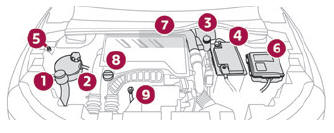
Diesel engine
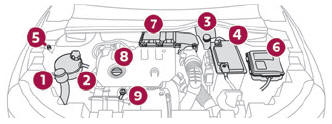
- Screenwash fluid reservoir
- Engine coolant reservoir
- Brake fluid reservoir
- Battery/Fuses
- Remote earth point (-)
- Fusebox
- Air filter
- Engine oil filler cap
- Engine oil dipstick
 Diesel fuel system
This system is under very high pressure. All work must be carried out only by a dealer or a qualified workshop.
 Electric motor
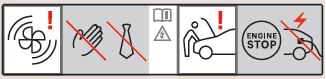
Take care with objects or clothing that could be caught in the blades of the cooling fan or in certain moving components - risk of strangulation and serious injury!
Before carrying out any work under the bonnet, you must switch off the ignition, check that the READY indicator lamp is off on the instrument panel and disconnect the charging nozzle if it is plugged in.
Electric motor
- Screenwash fluid reservoir
- Engine coolant reservoir (level only)
- Brake fluid reservoir
- Battery/Fuses
- Remote earth point (-)
- Fusebox
- 400 V electrical circuit
- Emergency circuit-breaker for emergency services and maintenance technicians
For more information on the Charging system (Electric), refer to the corresponding section.
 Bonnet
Stop
& Start
Before doing anything under the bonnet,
you must switch off the ignition to avoid any
risk of injury resulting from an automatic
change to START mode...
 Checking levels
Check all of the following levels regularly in
accordance with the manufacturer's service
schedule. Top them up if required, unless
otherwise indicated...
Other information:
DS 3 2016-2026 Owners Manual: Steering wheel adjustment
When stationary, pull the control to release the steering wheel. Adjust the height and reach to suit your driving position. Push the control to lock the steering wheel. For safety reasons, these adjustments must only be carried out with the vehicle stationary...
DS 3 2016-2026 Owners Manual: Activation/Deactivation
With the Adaptive Cruise Control with Stop & Go function activated, press this button. The action is confirmed by: The indicator lamp in the button lighting up green. The following symbol being displayed on the instrument panel. The colour of the symbol on the instrument panel depends on the operating status of the system: (grey colour) One or more operating conditions is not ..
Categories
- Manuals Home
- 1st Generation DS 3 Owners Manual
- 1st Generation DS 3 Service Manual
- Engine oil
- Central locking
- Boot
- New on site
- Most important about car
Principle of operation
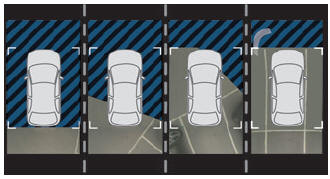
Using the rear camera, the vehicle's close surroundings are recorded during manoeuvres at low speed.
