
DS 3: Lane positioning assist / Activation/Deactivation
DS 3 2016-2026 Owners Manual
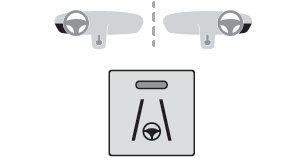
- With the Adaptive Cruise Control with Stop & Go function activated, press this button.
The action is confirmed by:
- The indicator lamp in the button lighting up green.
- The following symbol being displayed on the instrument panel.
The colour of the symbol on the instrument panel depends on the operating status of the system:
 (grey colour)
One or more operating conditions is not met; the system is paused.
 (green colour)
All operating conditions are met; the system is active.
 (orange colour)
System malfunction.
 For vehicles equipped with
a head-up
display, the information is projected onto
the blade.
For vehicles equipped with
a head-up
display, the information is projected onto
the blade.
If the driver no longer wishes to use the system for a while, they can deactivate it by pressing the button again.
The indicator lamp in the button goes off and the symbol disappears from the instrument panel.
 The system status is saved
when the
ignition is switched off.
The system status is saved
when the
ignition is switched off.
 Lane positioning assist
For
more information, refer to the General
recommendations on the use of driving
and manoeuvring aids.
The system identifies the limits of the traffic lane
and steers the vehicle inside this lane to maintain
it in the lateral position chosen by the driver...
 Cruise control. Pausing/Suspending the system
Cruise control
The driver must hold the steering wheel properly.
When cruise control is activated, the symbol is
displayed in green: by small steering actions, the
system directs the vehicle and keeps it in the
position chosen by the driver, in the traffic lane...
Other information:
DS 3 2016-2026 Owners Manual: Free-wheeling
In certain situations, it is necessary to put the vehicle into free-wheeling mode (e.g. towing, on a rolling road, automatic car wash (Wash mode), rail or sea transport). The procedure varies according to the type of gearbox and parking brake. With a manual gearbox and electric parking brake To release them With the engine running and while depressing the brake pedal, move the gear select..
DS 3 2016-2026 Owners Manual: Coolant temperature indicator
With the engine running: In zone A, the temperature is correct. In zone B, the temperature is too high. The associated warning lamp and the STOP warning lamp light up in red on the instrument panel, accompanied by the display of a message and an audible signal. You must stop the vehicle as soon as it is safe to do so. Wait a few minutes before switching off the engine. After switching o..
Categories
- Manuals Home
- 1st Generation DS 3 Owners Manual
- 1st Generation DS 3 Service Manual
- Central locking
- Door mirrors
- Steering wheel adjustment
- New on site
- Most important about car
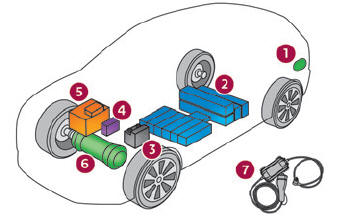
Electric motor

Copyright © 2026 www.ds3manuals.com